Showing posts with label Indian. Show all posts

Monday, January 18, 2021

Lentils with Greens & Ginger

August 2020, adapted from Mudhar Jaffrey’s “Green Lentils with Spinach and Ginger”


When I finished staining and adding soil to the giant planters on my deck, one of the things I planted in them was Swiss chard. To my surprise, it took off amazingly and my friend Pradnya told me that the chard would grow through the winter. She suggested that I cook it with lentils – that it is absolutely the best cooked. So, I read a few recipes and came up with what is below. 


Serendipitously, the NY Times published a recipe for “Weeknight Fancy Chicken and Rice,” (October 14, 2020 edition) which is an easily made variation of rice palau. Switching the chicken stock for vegetable stock and omitting the chicken makes a wonderful vegetarian complement to this dish. https://cooking.nytimes.com/recipes/1018299-weeknight-fancy-chicken-and-rice


EQUIPMENT

Small bowl

Measuring cup

Measuring spoons

Saucepan

Colander

Chef’s knife

Wooden Spoon

Cutting board

Large pan (skillet, saute pan, or small stock pot w/lid

Citrus reamer or heavy-duty spoon


INGREDIENTS

1 cup green lentils

4 cups water

1 bay leaf

1T extra virgin olive oil 

1 medium white onion, finely chopped

1t sea salt

2 fresh green chilis, thinly sliced in rounds

1t grated or minced fresh ginger

¼ t turmeric powder

4-5 of fresh greens, rinsed and stemmed (spinach, kale, chard, mustard, turnip, beet, or what-have-ye)

½ fresh cilantro, chopped and tightly packed

2T fresh lemon juice, or more to taste

1t garam masala

Freshly ground black pepper


RECIPE

1.     Rinse and sort the lentils, removing stones and debris. Strain and scoop into a small stock pot. 

2.     Add 4 cups of water, 1 bay leaf, and bring to a boil. Reduce heat, cover, and simmer on low heat for 1 hour. When finished, the lentils will have a bit of liquid when finished, that’s fine. Turn off the heat and set aside.

3.     While cooking rinse your greens well in a large colander. Remove the stems for compost or for freezing for later use in a homemade broth. 

4.     Bring your larger pot to temperature over medium heat. Add the oil and once it begins to shimmer, add the diced onion and salt. Cook, stirring occasionally until the onion begins to brown on the edges, but do not burn it (about 10 minutes).

5.     While the onions cook pile,
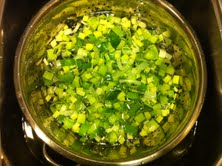
roll, and slice your greens into thin strips (chiffonade), mince the ginger, chop the cilantro, and slice the hot green chilis. Don’t forget to wash your hands after you handle cut hot peppers! 

6.     Add the ginger and chili slices, the turmeric, and stir for about 10 seconds. Then add the greens and cilantro. Allow to wilt for a minute or two, then add the lentil mixture. If you need to, add up to 1 cup of water. You want this to have a sauce. 

7.     Bring to a boil over Medium-High heat. Reduce the heat to very low, cover and cook gently for 25 minutes. 

8.     Add the lemon juice (and zest if you like). Sprinkle the garam masala over the dish and mix. Add a few grinds of black pepper. Continue cooking for 10 minutes.


Enjoy! This is fabulous served with rice palau from the recipe above. For meat eaters, it would be a hearty accompaniment to lamb or salmon. I’ve found it delicious enough that I keep it stockpiled in 12 oz frozen containers for school lunch! 

Sunday, January 17, 2021

South Indian Inspired Black Bean and Portobello Mushroom Chili

Whether eaten simply in a bowl or served over whole wheat spaghetti and topped with cheddar cheese, this recipe has been my go-to since discovering spice layering. This chili is more than a stew mimicking the feel and flavor of chili, it is a fun to cook and reliable recipe for making a vegetarian chili that suits the palettes of almost anyone. 

A couple of notes: 1) A heavy-bottomed stock pot works the best for this recipe. 2) Be sure to use canned black beans for the recipe – and use the cheapest available. They break down during cooking and give the chili a wonderful body that you cannot get from dried beans unless you cook them to the point of breaking down. 3) If you cannot find portobella mushrooms, white button mushrooms will do just fine. 


EQUIPMENT

Chef’s knife

Cutting Board

Stock pot with lid

Wooden Spoon

Can Opener

Colander

Measuring spoons 


INGREDIENTS
2T extra virgin olive oil
1T mustard seed (any color)
1T cumin seed
1 medium Vidalia (or sweet onion), diced

1T minced garlic

½ t sea salt

1 28-oz can whole tomatoes, crushed

2 15-oz cans black beans, drained and rinsed

2 15-oz cans kidney beans, drained and rinsed 

1 6-oz can tomato paste

2 rounded tablespoons of ground cumin

¼ t curry powder

¼ t cayenne pepper

1 8-oz package of portobello mushrooms


Recipe

Bring a stock pot to heat over medium high flame. While heating the pot, dice the onion and set it aside. Once the pot is hot, add the olive oil, mustard seed and cumin seed. Cover. The seeds will begin to pop open (much like popcorn). Once the rate of popping slows, turn the heat to medium low, add the dried peppers and diced onions. Add a small pinch of salt. Cook until translucent, stirring frequently. This takes 5-7 minutes. If the edges of the onions slightly brown, it’s completely fine. While the onion is cooking, mince your garlic. Once the onion is cooked, add the onion and saute for another 2 minutes or so. 


Use your hands to crush the whole tomatoes into the pot (or your spoon), taking a second to remove any remaining skin or hard cores that might be left on the tomatoes. Be careful not to cut or burn yourself. Add remaining juices to your pot. Fill the can with water, swish to remove adhering tomato from the can walls, and pour the water in your pot. Turn your heat to medium high. 


Drain and rinse beans in the colander. Add to the pot. Add the tomato paste and mix thoroughly into the pot (having the beans in first makes mixing easier). Then add your spices. Chop the mushrooms into bite-sized (1/2 – ¾ inches diced) pieces and add to the pot. Remember, they will shrink when cooking. 

Bring the pot to a boil. Reduce heat to medium-low and simmer for 40-45 minutes until desired cosistency. Serve over your favorite pasta, served with cheese and crackers or simply with a dollop of lime-coriander yogurt and sprinkle of cilantro!

Wednesday, April 29, 2020

Red Pepper Sauce (fresher than roasted)

Developed Summer 2019

About 30 years ago, I first learned about spaghetti squash, and though it was fun, thought it was a horrible substitution for pasta with a traditional marinara. Everyone raved about it as a “healthier” substitute, and I thought I was crazy. Then, about 10 years ago, I had zucchini squash thinly sliced with a vegetable peeler and topped with roasted red pepper sauce and thought, “Ah, that is good and would be good with all kinds of mild squash.” 

Last summer I was inundated with squashes from my community farm share and decided to do some research on good red pepper sauces, borrowed from many, and finally settled on this. It is very forgiving and quite delicious. I’ve used it as a sauce for squash and regular pastas, drizzled on homemade hummus, as a base for red pepper soup, and with curries.  My favorite pasta with red pepper sauce combination follows the recipe. 

This recipe is very forgiving and can be modified without loss of deliciousness.

EQUIPMENT
Cutting board
Chef’s knife
Measuring cup
Zester, such as a microplane
Food Processor (or blender)
Rubber spatula or spoon

INGREDIENTS
3-4 roasted red peppers (about 2 cups) 
2-3 non-roasted jarred red peppers (about 1.5 cups)
1 fresh red pepper, seeded and cored
2T shallot or mild white onion
2 cloves garlic
1T capers
1 lemon, zest and juice
2T fresh basil or ½ T dried basil
½ t sea salt; ¼ t black pepper
____
¼ cup extra virgin olive oil

 RECIPE
1.    Shake off the brine from the roasted and regular red peppers, rough chop them and toss them in the blender or food processor. (Rough chopping the ingredients helps ensure they are evenly distributed in your sauce.) 
2.    Peel and rough chop the onion and garlic then add to the peppers. 
3.    If you are using dried herbs, pulverize them by rubbing them between your palms as you add them to the peppers. This helps release their essential oils. 
4.    Add the remaining ingredients aside from the olive oil to the food processor. Blend until smooth. You may need to open the blender and scrape ingredients off the side of the container with a rubber spatula or wooden spoon.
Once the ingredients are fairly smooth, turn on the processor again and slowly blend in the olive oil.
The sauce is ready for use. It keeps well refrigerated in a tightly sealed container for 5 days or longer. 

My favorite pasta for this sauce:

Rigatoni with red pepper sauce and garlic, parsley, zucchini, mushrooms, capers, green olives, feta cheese. Any or all of these ingredients are optional; any hearty pasta will work. 

(serves 4-6 people)

·      Prepare the rigatoni as the package indicates while you make the sauce.
·      Quarter 8 oz (the standard package) of button mushrooms, cut the zucchini into ½ inch rounds and then in half-moons, mince ¼ cup of parsley leaves, and thinly slice 2-3 cloves of peeled garlic. 
·      Bring a sauté pan to temperature over medium heat. Once, it is hot, add about a tablespoon of olive oil to the pan. Then pop in 2-3 thinly sliced cloves of garlic. 
·      When the garlic begins to slightly brown, add the mushrooms and zucchini, a pinch of salt, and bring the temperature to low, stirring frequently until mushrooms and zucchini are cooked, about 5 minutes. 
·      Pour about 3 cups of the roasted red pepper sauce into the pot with the veggies and increase the heat to medium. Use more sauce if you feel like you need it. Add about a tablespoon of capers and ½ cup of olives sliced in half. If they have pimento, you can leave it – that is actually red pepper. The feta cheese can be crumbled and added now which will make the sauce creamy or as a garnish later.  Allow to simmer for 2-3 minutes, then take it off the heat. 

Saturday, January 31, 2015

Chana Gobi - Chick Peas and Cauliflower in a Tomato Curry Sauce

Cauliflower has been one of my favorite vegetables for decades and I adore Indian flavors, so it is no wonder that this is a go-to dish for me.  While it isn't your typical yellow curry, it is delicious.  Hats off to Madhur Jaffrey whose cookbooks taught me to soak the cauliflower in cold water prior to cooking it.  Her cookbooks are lovely and packed with recipes you can make to.  I suspect her influence is found in these recipes as well as those of the Moosewood Restaurant, my friend Rahul Kulkarni and so many others that taught me the essentials of great curries.

INGREDIENTS
1 T extra virgin olive oil, coconut oil or ghee
1 T black mustard seeds
1 T fennel seeds

½ onion, finely diced (I prefer about a 3mm dice here, but make it fairly fine)
1T ginger, minced
6 cloves garlic minced
1 jalapeno pepper, minced

¼ t tumeric
1/3 t cayenne pepper
½ t salt

1 medium cauliflower, cored, sliced into ¾ to ½ inch slices and then broken into bite sized pieces
1 can garbonzo beans, rinsed and drained
2 T water
1 28 oz can diced or whole tomatoes and juice

¼ t curry powder
¼ t garam masala
zest of 1 lemon (optional)

RECIPE
Soak cauliflower in a bowl of cold water for at least ½ hour.  Drain. Drain and rinse the garbanzo beans to remove any residual liquid that was in the can.  While the cauliflower is soaking, chop the onion and mince the ginger, garlic and pepper.  Then, get your spices ready.  The turmeric, cayenne and salt can go into one small dish and the curry powder and garam masala should go into a separate dish as the two groups will be added at different times.  

Heat a very large skillet or dutch oven over medium-high heat.  Once, hot, add the olive oil, cumin and fennel.  Allow the seeds to fry for a few seconds then toss in the onion, garlic, ginger and jalapeno pepper.  Cook, stirring constantly, until the onion begins to brown.  Add the first spice mixture (turmeric, cayenne and salt) to your pot and stir fry for another minute or two.  Once those spices are well incorporated into your aromatics, add the cauliflower, garbonzos and water to the pot.  Mix thoroughly and then add the tomatoes.  If the tomatoes you have on hand are whole, hand crush them into the pot, removing any remaining skin or tomato cores as you find them.  Add the tomato liquid as well.


Allow the mixture to simmer for 7 or 8 minutes, or until the liquid is mostly evaporated and the cauliflower is done, but still rather firm.  Now, add in the curry powder, garam masala and lemon zest and stir it thoroughly through the dish and allow to cook for another minute.  (Note that if you are using a pan that is too small, you may want to cover the pot for 5 minutes of the cook time to ensure the cauliflower is done).

Turn off the heat.  Garnish with cilantro or chopped almond.  Serve over your favorite grain if you like.  This spice portfolio is also great with another traditional combo -- mushrooms and black-eyed peas.

Friday, December 6, 2013

Vegan Palak Chana (and variations)

This recipe was inspired by the palak paneer recipe I discovered at www.vegrecipesofindia.com.  If you head there, you can watch a video of making the palak that may be very helpful to you.   If you are a fan of palak or saag dishes, this is a wonderful way to incorporate fresh spinach that makes it very easy to handle.  You'll need a stock pot, blender and two saute pans for smoothest operation here.  I've adapted the recipe for vegans, but it is just as easy to make palak paneer or with shrimp, scallops or chicken.  The recipe is made in three parts.

Serves 4

PART 1: fresh spinach puree

INGREDIENTS

2 bunches of spinach or 1 bunch turnip greens or mustard greens… or mix and match (You can also use frozen spinach here
2-4 jalapeño peppers, seeded and roughly chopped
2-4 clove garlic, roughly chopped
1 inch fresh ginger, peeled and roughly chopped

Rinse the spinach well while bringing a large pot of water to boil over high heat.   The easiest technique I've found is to put the plug in a very clean sink, place a colander with the spinach loosely in it and fill the sink with water.  Once filled, swish the spinach releasing and residual dirt or sand then drain the sink.  Spritz the spinach once over to remove any remaining dirt.

Once the water is boiling, add a healthy pinch of salt.  When the water again boils turn off the heat, add the spinach, cover and allow the spinach to steep for 2-3 minutes.  Drain the water from the spinach through your colander and then immediately immerse the spinach in ice cold water.  This keeps the spinach from turning brown.  Again drain the spinach squeezing out much of the water.

Once the cool spinach is drained, add the spinach, peppers, garlic and ginger to your blender or food processor.  Puree until smooth.  Set aside.


Part 2: chana (chick peas) and veggies

INGREDIENTS
1T madras curry powder
1t ground cumin
1/2 t tumeric
1/2 t ground cayenne pepper
1/2 t freshly ground coriander powder
Puerto-Rican style sofrito or cilantro pesto

2T olive oil
1 12-oz can of chick peas (garbanzo beans); drained, rinsed and dried
1 red bell pepper, cut in ribbons
6 oz package of white button mushrooms, sliced

Begin preparing the veggies by rinsing and draining  the chick peas very well in a colander.  Shake the water off and then pour the chick peas into a clean dish towel and allow to dry while you prepare your veggies.

Next, roast the spices.  This is best done in a high quality heavy-bottomed stainless skillet because it will be much easier to control the heat. To do this, measure all of your ground spices into a small, dry stainless steel sauté  pan.  Bring the spices to temperature over medium-high flame while watching carefully.  Once you see the spices start to smoke or change color slightly, begin moving them around the pan with a wooden spoon or by gently shaking the pan continuously until your spice mixture is homogenous and color and is approximately the color of caramel.  Take the roasted spices off the heat and set them aside.

Place a large skillet on medium-high heat.  Once hot, add the olive oil and then the dried off chick peas.  Any residual water will splatter, so be careful when adding them to the hot pan. Allow the chick peas to brown while cooking.  Once they begin to brown, reduce the heat to medium and add the remaining vegetables along with the sofrito (cilantro pesto) and sauté until the mushrooms start to shrink and look moist. Once this starts to happen, you can add the roasted spices and continue sautéing the vegetables until they are thoroughly cooked.  

Once thoroughly cooked, set the mixture aside. You will add it to the spinach puree later.


PART 3: palak chana

INGREDIENTS
spinach puree (from Part 1)
chana and veggies (from Part 2)
2 T olive oil
3/4 t cumin seeds
1 bay leaf
1/2 medium yellow or white onion, finely chopped
1 medium tomato, finely chopped
4-5 garlic cloves, minced
1/4 t tumeric powder
1/2 t red chili powder (optional)
pinch asafoetida or 1/2 inch of minced ginger root
1/2 t garam masala
1-2 T almond milk, whole milk or cream (optional)
sea salt
1t crushed kasuri methi (fenugreek) leaves **OPTIONAL:  DO NOT USE IF PEANUT ALLERGY EXISTS

Heat a stock pot or large sauté pan over medium high heat.  Add the cumin seeds to essentially fry them for about 1 minute.  Turn down the heat to medium and add the onion and bay leaf.  Cook for several minutes until the onion is browned.  When it is finished, it will look like this picture.

Now, add the garlic and chopped tomato and sauté until the tomatoes are softened.  Add the turmeric, chili powder and asafetida (or ginger) and saute for another minute or two.  Now, add the the spinach puree and the sautéed vegetables.  If the mixture is a little too dry, add 1/4 cup of water.  
Simmer on medium heat for 6-7 minutes to cook the spinach.  Add salt to taste (no more than a small pinch) and the garam masala.

Add  the almond milk and simmer for another minute.  If you are going to add the fenugreek leaves, now is the time to do it.  Remember that people with peanut allergies will have trouble with fenugreek.  You are ready to serve, so go ahead and remove the bay leaf.

Enjoy with rice, roti or nan!

VARIATIONS

More traditional vegetarian:  Use ghee or unsalted butter in place of oil and cream instead of almond milk.  Add paneer (homemade Indian cheese) to the vegetable sauté in part 2.

More traditional; not vegetarian: Add 1/2 pound of peeled and deveined shrimp to the vegetable sauté in part 2.

Condiments to Consider:  Top with ghee, cream, mango chutney or make a mustard oil-coriander-tomato chutney.  You could also top it with raita or coriander-lime yogurt. 

To make the chutney, heat 2 T of olive oil over medium high heat in a pan with a lid.  Once hot, add 1T of mustard seed.  Cover immediately and allow mustard seeds to pop open.  Once popping is done, remove from heat.  Chop a bunch of cilantro leaves (rinsed and stemmed), 2 medium tomatoes and a 2-3 green onions if you like. Combine with the mustard oil.  Can be kept refrigerated for a few days or frozen in ice-cube trays for later use.  If you want to freeze any herb like this (sofrito, pesto, etc), you can freeze it in ice cube trays and once frozen, store in a baggie for up to a year.

Friday, January 20, 2012

Curried Potato Leek Soup

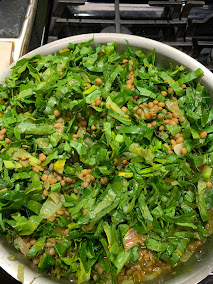
This is my take on the wintry potato leek soup that warms the bones and soothes the stomach.  Hearty, delicious, vegetarian.  It would be equally delicious in a vegan version, simply eliminating the cream.

A note about preparing leeks:  Leeks are grown in sandy soil.  They need to be very well-cleaned to remove sand from between the layers.  Trim the dark green, bitter and thick tops and roots from the leek.  Reserve these frozen for making broth at a later date.  Slice the leeks lengthwise in half and then in about 1/2" rounds.  Put the leeks in a colander, and put the colander in your very clean sink filled with water.  Swish the leek slices around vigorously and then drain.  Repeat.  Repeat one time more than you think necessarily.  Drain as needed for your recipe.  There is little more unpleasant than biting in to a clump of sand in your soup or other dish.

INGREDIENTS
2T extra virgin olive oil and/or soy butter
1 medium sweet yellow onion, diced
4-5 garlic cloves, peeled and thinly sliced
2 dried chilis
pinch of sea salt
2 cups white mushrooms, sliced
1/2 cup sliced (blanched, freshly canned, fresh or frozen) carrots
3 leeks, sliced and well-rinsed
3 cups of potatoes, 1/2-1" dice
8 cups of liquid (4 vegetable broth, 4 water works well)
1T hot madras curry powder
1/2T oregano
zest of 1 lemon (optional)
1/2 cup lentils (red or green are fine)
1/2 cup heavy cream (optional)
freshly ground black pepper

OPTIONAL GARNISHES
chives, parsley or other fresh herb (sage is nice)
grated sharp cheddar cheese

RECIPE
Heat a heavy stock pot over medium until surface is hot.  Add your oil or soy butter and then add the chopped onion, garlic, dried peppers and pinch of salt (maybe 1/4 t). Cook, stirring frequently until the onions become soft and translucent. You might add a couple grinds of pepper at this point.

Now, turn the heat up to medium high and add your potatoes and mushrooms.  Mix them in and allow them to begin to sizzle.  Add the remainder of the ingredients (aside from garnishes of course) and bring to a boil.

As soon as your soup starts boiling, reduce the heat to a very light simmer and cook until everything is cooked through (about an hour).

If you choose the vegan version and leave the heavy cream out, once the soup is cooked through, you will want to remove and blend 2-3 cups of the soup to a puree and add back to the soup for a nice creamy consistency.

A COUPLE OF WORDS ON BROTHS:  use a high quality vegetable broth or one you make on your own.  It is easy to make your own broth and a great way to use vegetable scraps or vegetables that aren't so fresh and beautiful anymore.  If you aren't vegetarian and have access to a wonderful, organic chicken broth, that works very well here, just reduce the broth amount to 3 cups broth and 5 cups water. On a very interesting twist, I occasionally use a can of low-fat low-salt split pea soup and make the remainder of the liquid water.  You are developing so much flavor here, you can be very creative.  Note that many veggie broths have the first ingredient as onion (and will be oniony) and others are more balanced and the first ingredient is carrot.  In this recipe, either works well.

Once the soup is cooked, serve immediately, garnishing with chopped chives, parsley and maybe a sprinkling of cheddar cheese.  Enjoy!

Tuesday, February 15, 2011

Curried Cauliflower with Chick Peas and Roasted Tomato

This is a modification of a wonderful recipe from Madhur Jaffrey's Indian Cooking.  It is terrific as a side dish or over rice as a main dish.  For non-vegetarians, a terrific modification is to add consider adding peeled, deveined shrimp rather than the chick peas.

INGREDIENTS
1 medium or large head of cauliflower, stemmed and cut into bite-sized pieces
1 14-oz can garbanzo beans (chick peas), well-rinsed and well drained
4-5 T canola or regular olive oil (a splash of mustard oil is nice if you have it on hand)
1T black mustard seeds
1T fennel seeds
14-oz roasted diced tomatoes
approximately 14 ounces water
a pinch of cayenne pepper or chili powder

PREPARING YOUR INGREDIENTS

Rinse and drain the chick peas.  Allow them to sit until they are fairly dry, shaking off excess water.  Canned or softened from dry will work fine.  A 14-oz can or 1 1/2 cups is a perfect amount for this recipe.

One secret to cooking delicious cauliflower is to allow it to off-gas prior to cooking or serving.  Cut the cauliflower into bite sized pieces.  Place in a large bowl and cover with water.  Allow the cauliflower to sit like this for at least 1/2 hour.  Then drain well.

RECIPE
While the cauliflower is soaking, put oil in a large skillet on high heat (one which you have a cover), a stock pot or dutch oven.  The oil should be about 1/8" thick in the pan. Whatever will hold the ingredients so that the cauliflower is spread as thinly as possible is best.  Use a thick bottomed pan if you have one because you want to control the heat of the pot.  It is very easy to scorch the food in a thin pan. I used my enamel coated cast iron for this recipe.

Throw in the mustard and fennel seed.  When the seeds begin to pop, add the drained and dry as possible chick peas.  Note that the water on the surface will cause the very hot oil to splatter, so be very careful.  You may want to wear an oven mitt so that you aren't burned.

Allow any water to boil off and the peas to fry and brown lightly in the oil, stirring occasionally.  Once they have begun to brown, add the cauliflower and stir thoroughly.  Allow the cauliflower to slightly brown in the oil, stirring only occasionally (but keep your eye on it because you are on high heat).  Once it begins to brown, add enough water to coat the bottom of the pan.  Add your tomatoes and mix through.

Now, you are going to steam the cauliflower. Add enough water so that you can easily steam the cauliflower (should be about equal in total to the amount of tomato you added).  You might also choose to add some tomato sauce if you prefer this dish to be more tomato-y.  Add a pinch (1/8t) or more of cayenne pepper, depending on your taste.  A tiny bit of heat is nice.  If you are out of cayenne or it is too hot for you, chili powder will work fine.  You still only want a small amount or the dish will be bitter.

Leaving the heat on high, over the pan and allow the cauliflower to steam for 8-9 minutes.  Be mindful of the amount of liquid in the pot to avoid burning the cauliflower.

Serve over saffron-lemon rice or simply as as side dish. If you would like to add shrimp, they are best added during the steaming portion of cooking.

Enjoy!

Sunday, January 23, 2011

Curried Butternut Squash Soup

INGREDIENTS
1 medium butternut squash, peeled and chopped
1 large russet potato, peeled and chopped
1 medium spanish onion, chopped
1 1/2 inches ginger, minced
3-4 garlic cloves, minced
1T extra virgin olive oil
1T hot madras curry powder
1/2 T tumeric
1 bay leaf
6-8 cups filtered water
small pinch grey salt or sea salt
freshly ground black pepper to taste

RECIPE
Peel and seed your butternut squash.  My preferred method is to use a chef's knife to remove about 1/4 inch off each end of the squash, set it on the now flat large end and slice it in half lengthwise.  Remove the seeds and stringy pith then slice each length in half cross-wise.  Use a peeler or paring knife to remove the skin, then chop into 1/2 inch pieces.  Peel and chop the potato into 1/2 inch cubes.

Place the chopped squash and potato into a dutch oven or heavy stock pot and cover with water to about 2 inches above the vegetables.  Bring to a rolling boil on high heat and immediately move to strain and set aside. (See roasted vegetable variation below.  The process fits into the recipe right here)

Bring the stock pot back to temperature over medium heat.  Add a tablespoon of extra virgin olive oil and your onion to the pot, adjusting the heat to allow the onions to cook gently and slightly caramelize. Once the onions have caramelized, add the bay leaf and dried spices.  Stir through to coat the onion well with the spices adding a slight bit more oil if necessary. Add the ginger and garlic. Continue to allow the onions to cook in the curry spices for another couple of minutes.  Add the  squash and potato and combine thoroughly with spiced onions.  Season with a small pinch of salt and freshly ground black pepper.

Cover with water, about 1 inch above the level of the vegetables and bring to a boil over medium heat.  Reduce the heat and simmer for 15-20 minutes, allowing the spices to meld.

Allow the soup to slightly cool.  For a wonderful consistency, puree 1/2 -3/4 of the soup in a blender being very cautious with the hot liquid.  Fill the blender only half way and hold the lid down with a dish towel during each blend.  Set aside in a heat proof bowl until you have pureed half or more of the soup.  Return the pureed soup to the pot and mix through.

OPTIONAL GARNISHES

Hot mustard and fresh tomato chutney (2T yellow or black mustard seeds heated in 3T canola oil until they begin to pop; 1/2 cup fresh tomato, chopped; 1/4 chives, chopped; 1/4 cilantro chopped.  Mix together)

Yogurt with coriander seeds and lemon  (1/2 cup plain yogurt, strained through cheesecloth to remove water;  1T whole coriander seed, freshly crushed; zest and juice from 1/2 lemon; 1/2 T honey)

VARIATIONS
Roasted vegetables.  Preheat your oven to 450.  Spread the briefly boiled squash and potato onto a cooking sheet and coat lightly with extra virgin olive oil.  Add a pinch of grey salt and freshly ground black pepper to taste.  Combine to cover and roast for 20-25 minutes or until the vegetables are slightly caramelized.  Add to the onion/curry mixture and continue the recipe as described and omit adding additional salt and pepper.

Saturday, July 25, 2009

Coconut Chutney

I learned the basics of this recipe from my dear friend Rahul when we were in grad school. This is a great topping for vegetable biryani, or baked fish (or even chicken). For a special meal, I often top halibut steaks with this chutney and bake in parchment paper. You may leave the peppers out entirely if you do not enjoy spicy food.

1 cup unsweetened grated coconut (you can easily purchase this from an Indian grocer)
2-3 jalepeno peppers
zest and juice from 1-2 lime (you need 2-3 T depending on how moist the other ingredients are)
1 inch fresh ginger root, peeled and minced or finely grated
1/2 cup fresh cilantro, large stems
1/4 cup sofrito
1T toasted cumin
2-4 T extra virgin olive oil

I often make the chutney completely by hand, so it is very possible to make a great chutney even if you do not have access to a food processor or blender, grate the coconut and mince and/or chop the ingredients finely. Mix by hand. In this case, you will want the mixture to sit for at least an hour so the flavors may be nicely blended.

-or-

In a food processor or blender, combine the coconut, peppers, lime, ginger, cilantro and cumin. Once well blended, continue to blend gently and stream in olive oil until it the mixture is a texture you like (perhaps more course for vegetable toppings; you might like it more smooth for baking with meat or protein).

Friday, July 17, 2009

My Favorite Yogurt Sauce

This is a very good sauce for spicy dishes...it replaces a dollop of sour cream and is more refreshing.

1 C plain or fat free yogurt (I only use organic dairy)
1 lime; zest and juice
1 tablespoon coriander seeds
1/4 cup fresh cilantro leaves (optional)
pepper to taste

Place a metal sieve that can hold your yogurt over a bowl. Insert a cheesecloth, large flat coffee filter or a couple of paper towels over the sieve. Put the yogurt on top of the cloth to drain, refrigerated, for at least 1/2 hour.

Zest and juice a lime, making certain to strain out any seeds. With a mortar and pestle, grind the coriander seeds. The grindings don't have to be very fine; what you have the patience to do is okay. Mince the cilantro if you plan to add it.

Once the yogurt is strained (and anything really between unstrained and overnight is good depending on your preferred thickness and application), discard the residual liquid. Use a spoon or silicone spatula to transfer the thick yogurt to a bowl. Add your lime juice and spices and mix thoroughly. Add freshly ground pepper to the top and fold in.

Enjoy this on chili, Mexican rice, fish tacos, biryani, or any other dish that you would like a cooling influence.

Greek Variation (Tsatsiki)
Tsatsiki is often used as a condiment for gyros and other spicy Greek dishes, and includes:
1 cup yogurt
1/4 cup shredded cucumber, drained
1-2 cloves of garlic, minced
1/8 cup fresh mint leaves, minced
salt and pepper to taste
1 teaspoon extra virgin olive oil

Indian Variation (Raita)
1/2 seeded, towel dried and diced cucumber
1/2 tablespoon toasted cumin seeds
1 clove garlic, minced
1 tablespoon minced cilantro leaves (mint or italian parsley are fine if you don't prefer cilantro)


Thursday, July 9, 2009

Cauliflower with fennel and mustard seeds


Cauliflower has long been one of my favorite vegetables and it is very good for people with stomach issues. One of the most important things about cooking good cauliflower is the preparation of it:

Preparation & Ingredients:

1 small cauliflower head
5 T extra virgin oil (you can use safflower or canola)
2 teaspoons mustard seed (I prefer dark, but either will work)
1 teaspoon fennel seed
1T garlic, minced
1/8 teaspoon tumeric
1/4 teaspoon madras curry powder (optional)
1/4 teaspoon cayenne pepper
1/4 - 1/3 cup water

Cut the cauliflower head into bite sized florets and soak in cold water for a minimum of 1/2 hour. This removes the gasses and prepares it for crisp cooking. Drain the cauliflower and set aside.

Cooking Instructions

In a large skillet, fry pan or sautee pan (preferably one for which you have a lid) add the oil over medium heat.

Once hot, toss the seeds into the oil. As soon as the seeds begin to pop, add the garlic, stirring fairly constantly. As the garlic begins to brown on the edges, add the tumeric, curry powder, and cayenne pepper. Mix through and add the cauliflower, water and a pinch of salt.

Stir the ingredients to mix thoroughly and cook for about 8 minutes. The cauliflower may be slightly browned, but should be crisp yet cooked through. Add small amounts of water if needed. If your dish is not cooked thoroughly enough for your taste, leave the pot covered during the last 2-3 minutes of cooking and another 2-3 minutes of cooking after you turn the heat off.

Variations

You might enjoy adding garam masala rather than curry powder. You may leave both out altogether.

Italian variation: Omit the mustard seed, tumeric, curry powder and cayenne. Increase the amount of garlic. Instead, add about 1/2 teaspoon dried oregano. Consider adding a bit of chopped fennel root with the cauliflower. Steam in about a cup and a half of diced tomatoes (I use canned for all cooked application except when the tomatoes are freshly picked because they are generally better quality and higher in nutrients than out of season fresh).


Casserole variation: Add 2-3 egg yolks to a cup of heavy cream to make a custard. Stir thoroughly. Place cooked cauliflower in a casserole dish and cover with the custard mixture. Mix throoughly and top with a sprinkling of cheese mixed with bread crumbs or panko (parmesan, cheddar, swiss, whatever you like). Bake in a 350 oven for 1/2 hour.

Wednesday, July 8, 2009

Vegetable Biryani

2 Tbsp light olive oil
1 red bell pepper, diced
1 carrot, diced
1/2 onion, diced
1 tsp turmeric
3/4 tsp garlic, minced
1/2 tsp cinnamon
1/2 tsp cumin
1/4 tsp ginger
1/8 tsp cayenne pepper
1 cup uncooked Basmati rice
2 cups water
1/2 cup frozen peas
1/2 cup raisins
salt to taste
3/4 cup whole roasted, salted cashews

In a 3-quart saucepan, saute the onion, carorot and bell pepper in the oil until tender. Reduce heat to low. Add the garlic, turmeric, cinnamon, cumin, ginger, and cayenne. Saute for 2 more minutes. Add rice and water. On medium high heat, bring to a boil, stirring frequently. Reduce heat to low, cover, and simmer for 25 minutes or until rice is tender. Add peas and raisins. Cover and let stand for 5 minutes. Add salt to taste. Garnish with cashews.

Muttar "Paneer" for the Vegan Set

My favorite Indian dish - with tofu instead of cheese!

2 Tbsp vegetable oil
1 tsp cumin seeds
1 bay leaf
2 medium onions, finely chopped
1 piece (1/2 inch) ginger root, finely grated
1.5 tsp ground coriander
1 tsp ground turmeric
1 tsp garam masala
1/2 tsp chili powder or to taste
1/2 tsp salt
2 medium tomatoes, finely chopped
1 cup frozen peas
1 cup water
1/2 pound extra firm tofu cut into 1 inch cubes
cilantro to taste

Heat oil in a heavy skillet. Add cumin seeds and bay leaf, cook over medium heat until fragrant, about 30 seconds. Add onions and ginger. Cook, stirring, until onions are golden, about 5 minutes.

Add coriander, turmeric, garam masala, chili powder and salt. Sprinkle with a little water; cook over low heat until the oil starts to separate, about 3 minutes. Add the tomatoes and cook until the oil starts to separate again. Add the peas, cook 1 minute. Add 1 cup of water. Cook until the peas are tender, about 5 minutes. Add the tofu and simmer until the sauce becomes thick. Sprinkle with chopped cilantro and serve over rice.

Hint - add more tomatoes if you really like the sauce.

Spicy, Ecclectic, Veggie Friendly